Owl mascot waving

Great design guides decisions. Bad design tricks people. Let’s learn the difference — and always choose the ethical path.

Decision Architecture & Dark Patterns

Where Persuasion Ends & Manipulation Begins

Osama Ali

linkedin.com/in/os3li
INTRODUCTION

The Power of Choice Design

Every interface is a choice environment. The way options are arranged, labeled, and defaulted profoundly shapes user decisions. This power can be used for users — or against them.

There is no such thing as a neutral design. Every layout, every default, every label is a nudge in some direction.

🏗️

Architecture

How options are structured influences what gets chosen — even if the options themselves don’t change.

🎯

Nudge

Small design choices (defaults, order, framing) guide behavior without removing freedom.

⚖️

Ethics

The line between helpful guidance and manipulative deception is thin — and critical to respect.

CONCEPT 01

Choice
Architecture

The way choices are presented influences what people pick. Defaults, ordering, and grouping shape decisions more than the options themselves.
Owl thinking

“The default option wins 70–90% of the time. Choose your defaults wisely — they are the decision for most users.”

🔑 In UX: Pre-select the best option for most users. Put the recommended plan first. Use smart defaults in forms — but always let users change them.
Choice Architecture

The Power of Defaults

Send me weekly updates Default: ON
87% keep the default

Order Matters

1st Top position Selected 3× more
2nd Middle Baseline
3rd Bottom Often skipped

Framing Effect

“10% failure rate”
“90% success rate”

Same data, different reaction.

CONCEPT 02

Decoy Effect

Introducing a strategically inferior option (the decoy) makes another option look much more attractive by comparison. The decoy isn’t meant to be chosen.
Owl explaining

“Nobody picks the medium popcorn. It exists only to make the large look like a steal.”

🔑 In UX: Common in pricing pages. The “Pro” plan often exists to push users toward “Enterprise.” Ethical when it genuinely helps users pick the best value.
Decoy Effect — Pricing
Basic
$9/mo
  • 5 projects
  • 1 GB storage
  • Email support
Pro
$22/mo
← Decoy
  • 15 projects
  • 5 GB storage
  • Priority support
Most Popular
Business
$25/mo
  • Unlimited projects
  • 50 GB storage
  • 24/7 phone support
Best Value ✨
💡 Pro at $22 makes Business at $25 feel like an obvious upgrade — only $3 more for vastly more features.
CONCEPT 03

Dark Patterns

User interface designs that trick users into doing things they didn’t intend to do. They exploit cognitive biases for business gain at the user’s expense.
Owl warning

“A dark pattern is when a UX designer uses their powers for evil. Knowing them helps you avoid building them.”

🔑 Remember: Harry Brignull coined the term in 2010. The EU’s Digital Services Act and FTC now actively penalize dark patterns. They’re not just unethical — they’re increasingly illegal.
Dark Pattern Taxonomy
🪤 Roach Motel Easy to get in, hard to get out
😢 Confirmshaming Guilt-tripping users who decline
🎭 Disguised Ads Ads that look like content or nav
🐌 Sneak into Basket Items added without user consent
Trick Questions Double negatives that confuse
👻 Hidden Costs Fees revealed only at checkout
CONCEPT 04

Confirmshaming

Making the opt-out option deliberately guilt-inducing so users feel bad about declining. The “No” button shames you into clicking “Yes.”
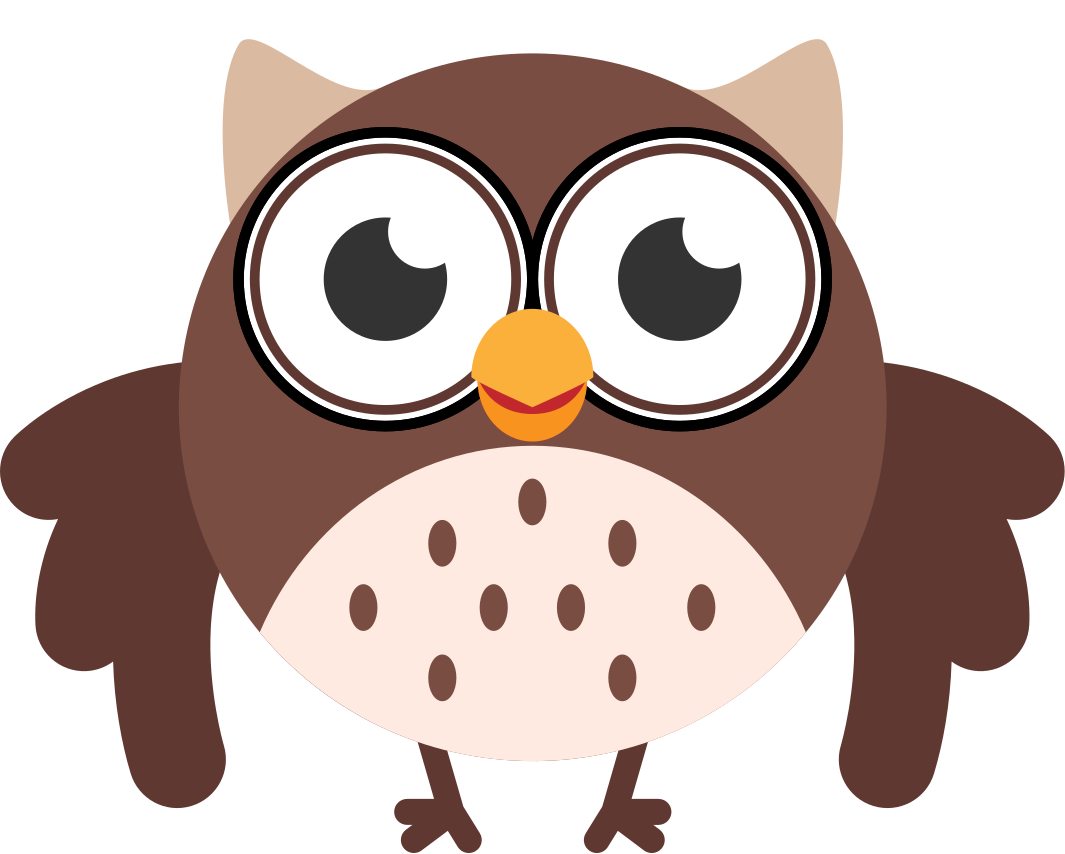
Owl upset

“No thanks, I hate saving money” — if you’ve ever seen a button like this, you’ve been confirmshamed.”

🔑 In UX: Offer neutral decline options. “No, thanks” is respectful. “No, I don’t want to grow my business” is manipulative.
Confirmshaming Examples
🎁 Get 20% off!
Sign up for our newsletter and save!
⛔ Shaming
🎁 Get 20% off!
Sign up for our newsletter and save!
✅ Respectful

Hall of Shame

“No thanks, I don’t want to be successful”
“I’ll pass on growing my audience”
“No, I hate free things”
CONCEPT 05

Roach Motel

A design where it’s very easy to get into a situation (subscribe, sign up, add) but deliberately difficult to get out (cancel, delete, unsubscribe).
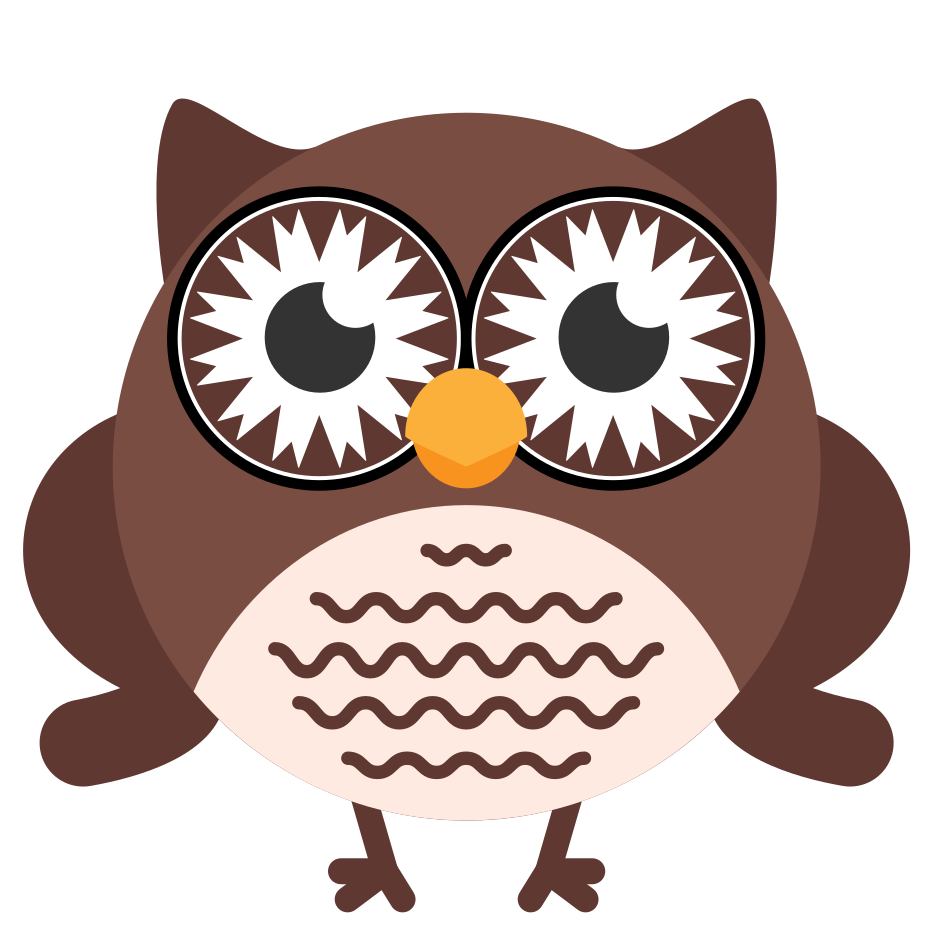
Owl trapped

“One click to subscribe. Five pages, two phone calls, and a letter to cancel. Classic roach motel.”

🔑 In UX: The FTC’s “Click-to-Cancel” rule now requires cancellation to be as easy as signup. Make unsubscribe as simple as subscribe.
Roach Motel
✅ Getting In
1 Enter email
2 Click “Subscribe”
✅ Done!
⏱️ 10 seconds
⛔ Getting Out
1 Find settings (hidden)
2 “Are you sure?” modal
3 Explain why you’re leaving
4 “Talk to support first”
5 Confirm via email link
⏱️ 15+ minutes
CONCEPT 06

Misdirection &
Trick Questions

Using visual hierarchy, confusing wording, or double negatives to steer users toward an unintended action. The design guides your eye away from what matters.
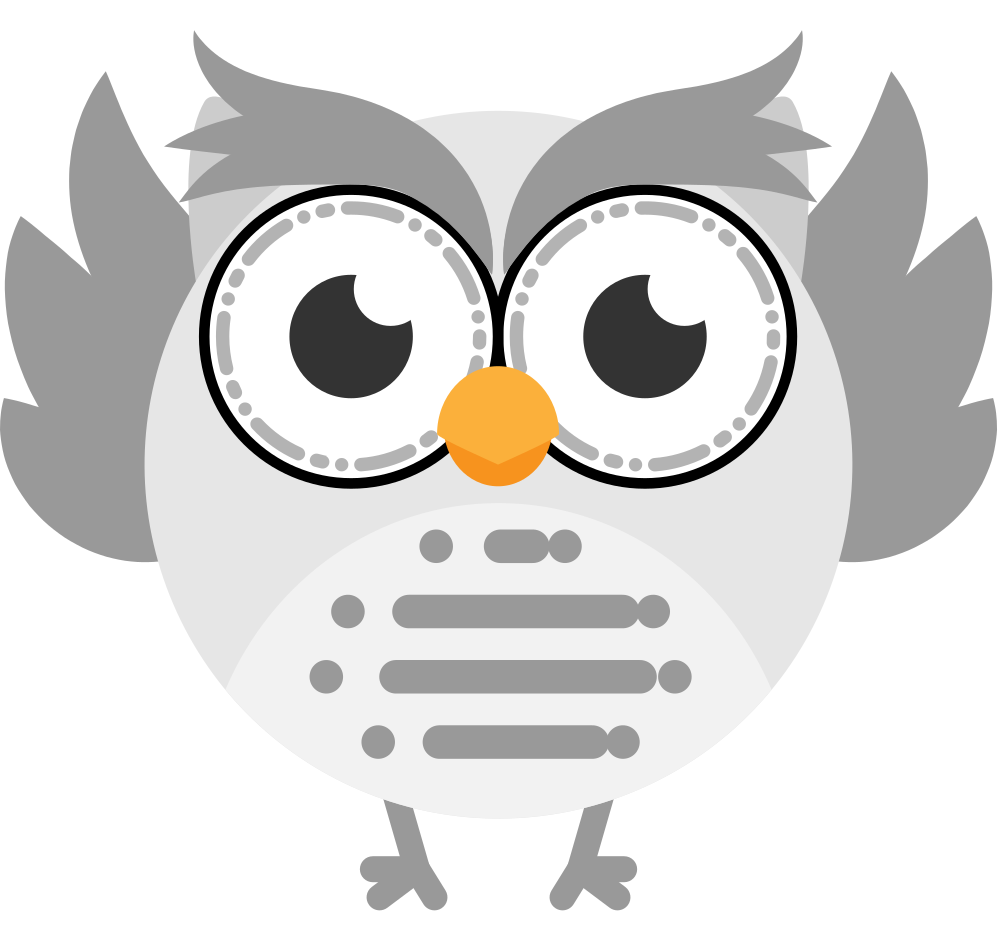
Owl confused

“Uncheck this box if you do not wish to not receive our newsletter.” Wait — what did I just agree to?”

🔑 In UX: Use clear, affirmative language. One action per checkbox. Never use double negatives. Make the primary action visually obvious.
Misdirection & Tricks
❌ Trick Question
🤔 ???
✅ Clear Language
👍 Clear!

Visual Misdirection

❌ Dark
Accept All Cookies Manage preferences
✅ Fair
Accept All Reject All
CONCEPT 07

Ethical Design
Principles

Ethical UX means designing with transparency, respect, and honesty. It builds long-term trust, reduces churn, and creates genuine loyalty — not forced dependency.

Owl ethical

“An ethical design makes money by being genuinely useful, not by tricking users into staying.”

🔑 The Test: Would you be comfortable if your design decisions were shown on the front page of a newspaper? If not, redesign.
Ethical Design Pillars
🔍
Transparency Show what data you collect and why. No hidden terms.
🤝
Respect Honor user choices. If they say no, accept it gracefully.
💬
Honesty Use clear language. No manipulative copy or hidden fees.
🔓
Control Let users leave as easily as they joined. Their data, their choice.

The Business Case for Ethics

+32% Customer retention
-45% Support tickets
+28% Referral rate
CONCEPT 08

Dark vs Ethical:
Side by Side

Every dark pattern has an ethical alternative that respects the user while still achieving business goals. Ethical design isn’t anti-business — it’s sustainable business.

Owl comparing

“Short-term manipulation creates churn. Long-term respect creates advocates.”

🔑 Ask yourself: Does this design help the user accomplish their goal, or only ours? If only ours, redesign.
Dark vs Ethical
⛔ Dark Pattern ✅ Ethical Alternative
Cancel Flow 5-step maze + phone call One-click cancel button
Newsletter Pre-checked subscribe box Unchecked opt-in checkbox
Pricing Hidden fees at checkout All-inclusive pricing upfront
Decline CTA “I hate saving” “No, thanks”
Cookies Giant “Accept”, tiny “Settings” Equal-weight Accept / Reject
CONCEPT 09

The UX Ethics Checklist

Before shipping any design, run it through these questions. If any answer is “no,” redesign.

📋

Pre-Launch Questions

Can users easily find how to undo this action?
Is the primary action what the user wants (not what we want)?
Are all costs visible before the user commits?
Is cancellation as easy as signup?
🧪

The Newspaper Test

Would I be proud if this design was made public?
Would I want my family to experience this flow?
Does this design pass a regulator’s review?
Does this help the user achieve their goal?
Owl celebrating

Decision Architecture
Complete

Design decisions for users, not against them. Guide ethically, be transparent about defaults, and remember: trust is the most valuable conversion metric.

01

Defaults

Choose defaults that serve users. They rarely change them.

02

Transparency

Show all costs, terms, and consequences upfront.

03

Symmetry

Getting out should be as easy as getting in.

04

Respect

Never shame, trick, or guilt-trip your users.

linkedin.com/in/os3li
1 / 12